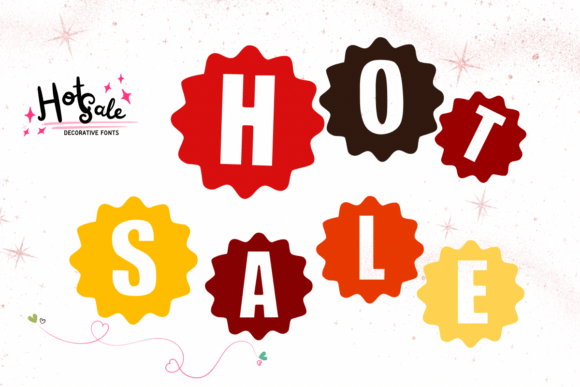
Hot Sale Font for Editorial and Content Design
There’s something about the right font that can transform a simple layout into a memorable experience. I recently found myself in the familiar situation of redesigning a lifestyle blog header, and Hot Sale caught my eye. As a decorative font, it offered just the right blend of charm and character to elevate the visual identity without overpowering the content.
A Versatile Decorative Typeface
Hot Sale is a decorative font with a rhythm that feels both playful and refined. Its curves are soft yet deliberate, giving it a handwritten quality that feels personal and approachable. It has a warm, inviting mood that works well for creative projects where personality matters more than strict formality.
The font's visual character makes it ideal for titles, pull quotes, and section headers. It adds a sense of movement and energy that can be missing from more traditional typefaces. When I used it for a blog header, it immediately gave the design a fresh, modern feel while maintaining readability at a glance.
Real-World Applications in Editorial Design
In a recent project, I tested Hot Sale in a recipe ebook layout. For the chapter openers and title pages, the font brought a sense of whimsy that complemented the overall theme of the book. It worked especially well for section headings, adding a touch of creativity without making the text hard to read.
I also experimented with using it in a digital magazine layout. For the cover title and feature headlines, it provided an elegant contrast against minimalist backgrounds. The font's decorative nature made it stand out, which was perfect for drawing attention to key content elements.
Another use case came when designing a printable planner. Hot Sale was used sparingly—mainly for decorative accents and event titles. It added visual interest without overwhelming the user interface, which was crucial for maintaining usability in a functional product.
Readability and Practical Considerations
While Hot Sale is undeniably expressive, it's not suited for long-form body copy or small captions. Its decorative style means it works best for shorter, impactful text. For example, using it for pull quotes or callout boxes in a newsletter graphic can add emphasis and visual hierarchy effectively.
When considering screen reading, mobile layouts, and PDF exports, it's important to ensure the font scales well and remains legible across different devices. In my testing, Hot Sale maintained its clarity even at smaller sizes, though I always recommend pairing it with a more readable serif or sans serif font for body text.
For print materials, the font holds up nicely, but again, its use should be limited to areas where decorative flair enhances rather than distracts from the message. In formal reports or dense paragraphs, it would likely be too expressive for the context.
Font Pairing and Design Flexibility
One of the strengths of Hot Sale is its ability to pair well with other fonts. For instance, in a coaching workbook, I paired it with a clean sans serif font for body text. This combination created a balanced look—playful yet professional. Similarly, in a creator newsletter, it worked beautifully alongside a classic serif font for a timeless editorial feel.
Before using Hot Sale in any commercial project, it's worth checking what styles, alternates, ligatures, weights, and multilingual support are included. Understanding these details ensures that the font will meet the needs of your specific design goals, whether you're creating an ebook, printable guide, or digital download.
Also, verifying the licensing terms is essential, especially if the font will be used in paid newsletters, client publications, or digital products. Ensuring that you have the right to use it commercially helps avoid any legal issues down the line.
Whether you're working on a lifestyle blog, wedding guide, or course PDF, Hot Sale offers a unique way to inject personality into your editorial designs. It’s a font that speaks softly but clearly, making it a valuable addition to any designer’s toolkit.